A Complete Guide to Scotland’s Highland Games
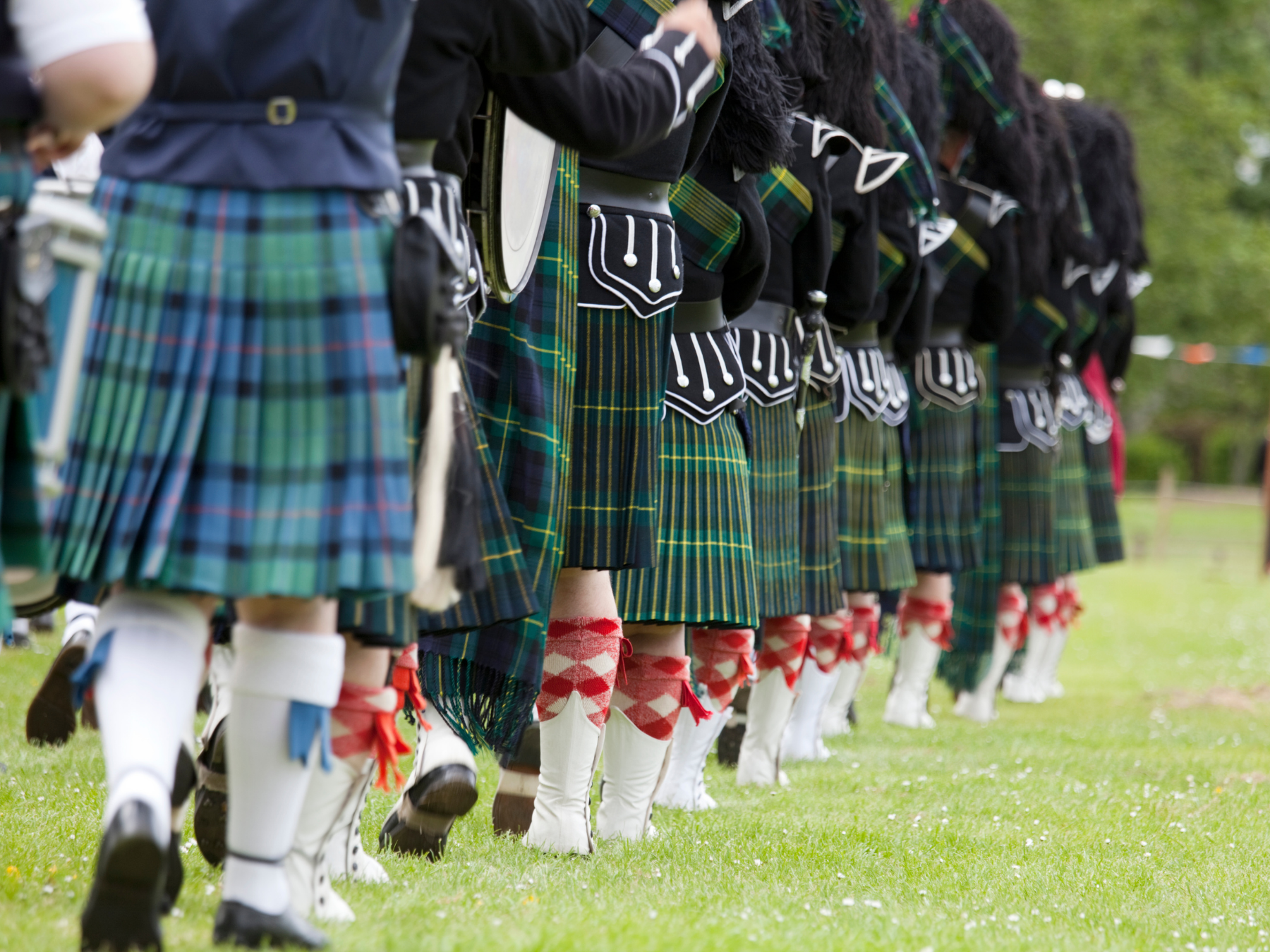
To many first-time attendees, the Highland Games appear as a series of striking, individual moments – a caber flipping end over end, a weight soaring above a bar, the unmistakable sound of bagpipes carrying across the field. But beneath these moments is a carefully structured system of competition, one rooted in centuries of tradition and refined through modern standards. The Highland Games are not simply a collection of performances; they are a coordinated, rule-driven series of athletic and cultural events designed to test strength, control, technique, and endurance. Understanding how these events function transforms the experience from passive observation into active appreciation, allowing spectators to recognize not just what is happening, but why it matters.
A Brief History: Strength, Skill, and Clan Identity
The origins of the Highland Games are often traced to gatherings in the Scottish Highlands where clans would come together to demonstrate strength, loyalty, and readiness. These events were not created for entertainment in the modern sense, but as practical displays of physical capability and discipline. Chiefs and leaders relied on these competitions to identify individuals who possessed the strength, coordination, and resilience necessary for survival and defense. Over time, these gatherings evolved, shaped by both cultural tradition and historical disruption, eventually reemerging as organized events that preserved elements of their original purpose. Today’s Highland Games carry that legacy forward, blending historical influence with standardized competition.
The Structure of the Highland Games
Modern Highland Games operate within a framework that emphasizes consistency, fairness, and progression across multiple events. Organizations such as the International Highland Games Federation play a key role in establishing rules, regulating equipment, and defining athlete divisions. While individual Games may vary slightly depending on location, most follow a similar structure in which athletes rotate through a series of events, accumulating points based on performance. Rather than crowning a winner for a single event alone, the overall champion is determined by consistent performance across the full range of competitions.
Athletes are typically grouped into divisions based on experience, weight class, or gender, ensuring that competition remains balanced and meaningful. Throughout the day, competitors move from one event to another in a set order, creating a rhythm that defines the flow of the Games. Judges evaluate each attempt according to specific criteria, often prioritizing technique and control as much as raw strength. This structure reinforces a central truth of the Highland Games: success is not determined by a single moment, but by the ability to perform well across multiple disciplines.
Heavy Athletics: The Core of the Highland Games
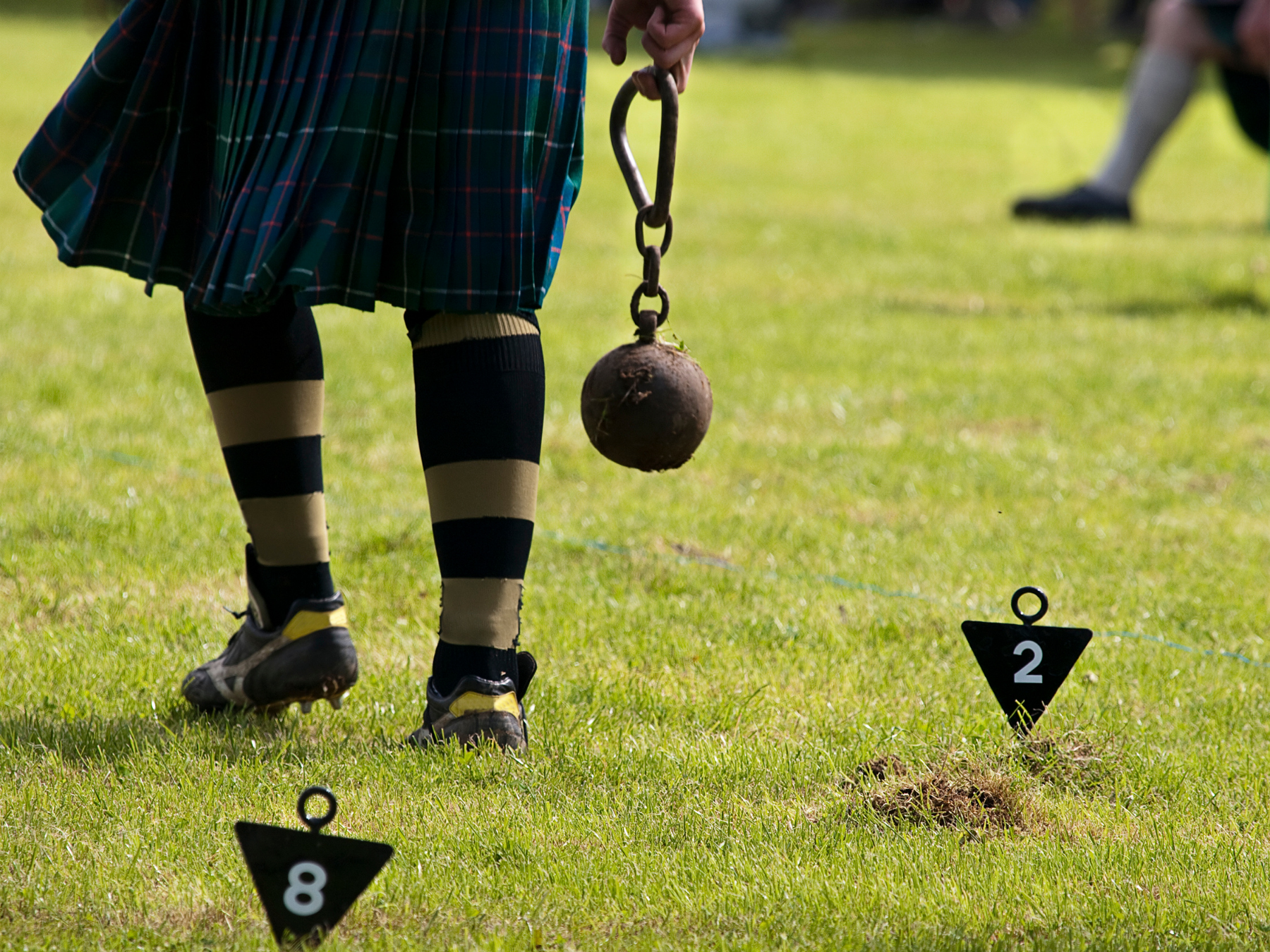
At the heart of every Highland Games gathering are the heavy athletic events. These competitions are the most recognizable and often the most anticipated, yet they are also the most frequently misunderstood. While they appear to be tests of brute strength, each event is governed by precise rules and judged according to technique, execution, and control.
The Caber Toss
The caber toss is perhaps the most iconic event of the Highland Games, but its objective is often misinterpreted. Spectators unfamiliar with the rules may assume that the goal is to throw the caber as far as possible. In reality, distance is irrelevant. The athlete begins by lifting and balancing a large tapered log vertically, then runs forward before flipping it end over end. The ideal outcome is a clean turn in which the caber lands directly in line with the athlete’s path, pointing away in what is commonly described as the “12 o’clock” position.
Judging is based on alignment and control rather than power alone. A perfectly executed toss demonstrates not just strength, but balance, timing, and precision. Even a heavy caber that fails to turn properly will rank below a lighter caber that achieves a more accurate position. For spectators, understanding this distinction changes how the event is perceived, shifting focus from spectacle to technique.
Stone Put
The stone put bears a resemblance to the Olympic shot put, but with key differences that reflect its distinct heritage. Athletes throw a large stone using one hand, aiming for maximum distance within defined boundaries. There are typically two variations of this event: the Braemar stone and the open stone.
The Braemar stone is performed from a standing position, with no approach or run-up allowed. This version emphasizes raw strength and stability, requiring athletes to generate force without the aid of momentum. In contrast, the open stone allows for a glide or spin technique, introducing an additional layer of coordination and timing. The difference between these styles highlights the diversity within Highland Games events, demonstrating how variations in rules can fundamentally change the nature of competition.
Scottish Hammer Throw
The Scottish hammer throw is visually distinct and technically demanding. Unlike its Olympic counterpart, this event requires athletes to keep their feet planted firmly on the ground while swinging a weighted implement around their body. To maintain stability, competitors often wear specialized footwear with blades that anchor them in place.
With their feet fixed, athletes rely on upper body strength, core control, and precise timing to generate momentum. The hammer is swung in a circular motion before being released, with distance determining the outcome. The constraint of immobility makes this event particularly challenging, as even minor imbalances can disrupt the throw. For spectators, recognizing this limitation adds a new layer of appreciation for the skill involved.
Weight for Distance
The weight for distance event bridges the gap between raw strength and athletic movement. Athletes throw a weighted implement, typically using one hand, aiming to achieve the greatest horizontal distance possible. Both light and heavy versions of the weight are used, each presenting unique challenges.
To maximize distance, competitors often employ a spinning technique, building momentum before release. This introduces an element of rhythm and coordination that distinguishes the event from more static displays of strength. Success depends not only on power, but on the ability to transfer that power efficiently through controlled motion.
Weight Over Bar
Weight over bar is one of the most accessible events for spectators to understand and follow. Athletes attempt to throw a heavy weight upward over a horizontal bar using a pitchfork-style motion. The bar is raised incrementally, and competitors are eliminated as they fail to clear each height.
This format creates a natural progression and builds anticipation as the field narrows. Unlike events measured purely by distance, weight over bar emphasizes vertical power, timing, and technique. The simplicity of its objective, combined with the drama of elimination, makes it a favorite among audiences.
Track and Field-Style Events
While heavy athletics form the core of the Highland Games, some events (particularly in North America) incorporate elements reminiscent of track and field. Foot races, tug-of-war, and other competitions may be included depending on the host organization. These additions reflect the adaptability of the Games as they have spread beyond Scotland, allowing local communities to shape the experience while maintaining its foundational elements.
This evolution is not a departure from tradition, but a continuation of it. The Highland Games have always responded to the needs and identities of the communities that host them, making each gathering both familiar and distinct.
Cultural Competitions
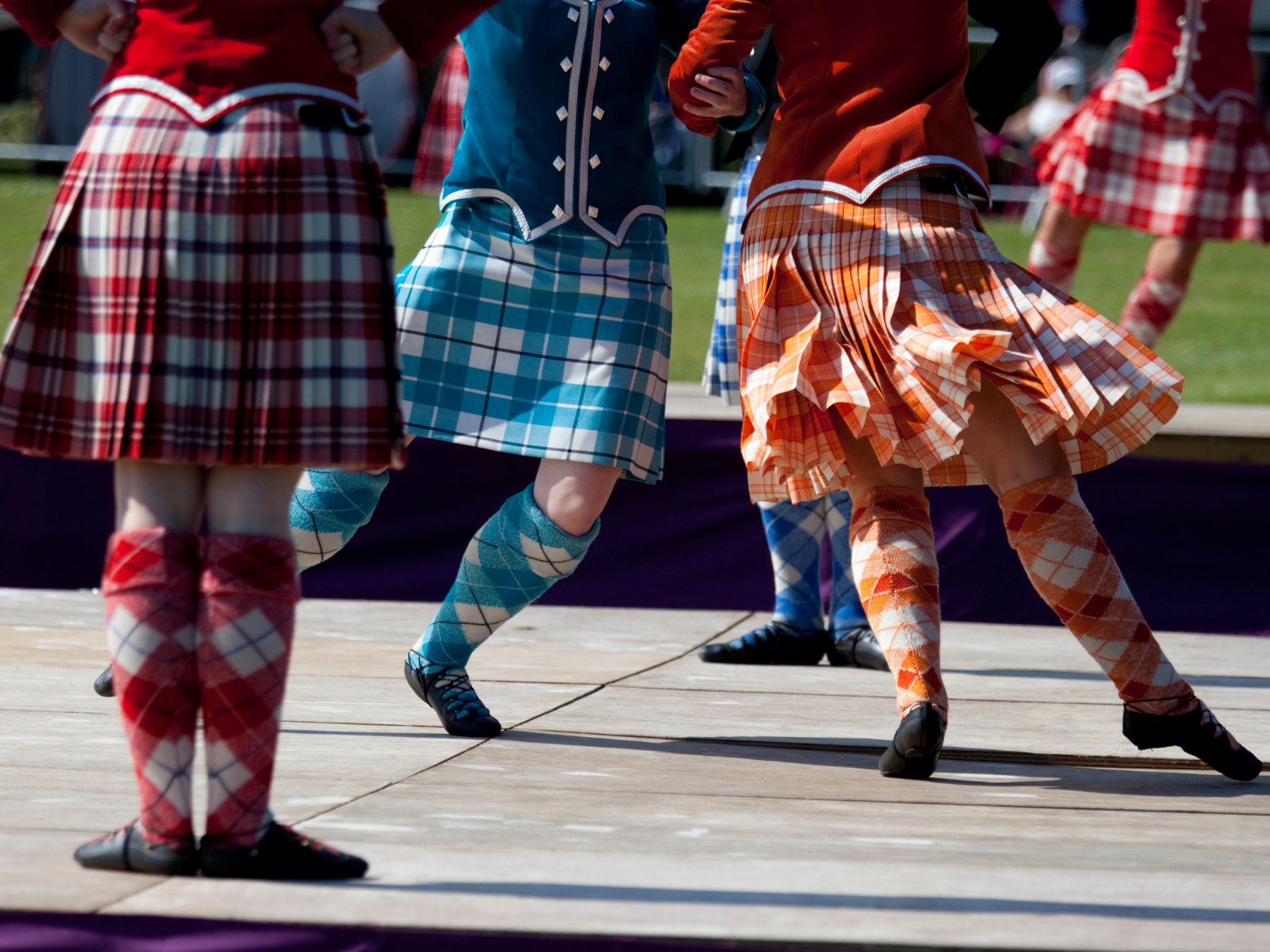
Beyond athletics, the Highland Games serve as a platform for cultural expression through music and dance. Highland dancing competitions require precision, discipline, and years of training, while piping and drumming are judged according to strict musical standards. These performances are not simply entertainment; they are highly technical disciplines that preserve and transmit cultural knowledge.
Together, these elements create a more complete picture of Scottish identity. The Games are not solely about physical strength, but about continuity – ensuring that traditions are practiced, refined, and shared across generations.
Women’s Athletics: Expanding the Field of Competition
In recent years, women’s participation in Highland Games athletics has grown significantly, bringing increased visibility and recognition to female competitors. Women’s divisions now feature many of the same events as men’s competitions, with standardized rules and dedicated championships.
This expansion reflects the evolving nature of the Games. While rooted in history, they are not static. Instead, they continue to adapt, creating opportunities for broader participation while maintaining the integrity of the competition. The inclusion and advancement of women’s athletics is one of the clearest examples of this progression.
How to Watch the Highland Games Like an Insider
For those attending the Highland Games, understanding the rules and structure of each event transforms the experience. A caber that fails to turn may still demonstrate remarkable strength, while a perfectly aligned toss reveals technical mastery. In the stone put, subtle differences in technique can determine the outcome, and in the hammer throw, balance is just as important as force.
Rather than focusing solely on distance or height, spectators benefit from observing how each movement is executed. The Games reward consistency across events, meaning that a well-rounded athlete often prevails over one who excels in a single discipline. Recognizing these nuances allows viewers to engage more deeply, turning each moment into something more than spectacle.
Understanding the Games Changes Everything
The Highland Games are often experienced visually first through movement, sound, and atmosphere. But understanding the structure behind those elements reveals something far more complex. Each event carries its own set of rules, techniques, and expectations, all working together to form a cohesive system of competition.
By looking beyond the surface, the Games become more than a festival. They become a living tradition, one that continues to evolve while remaining grounded in its origins. And once that structure is understood, every toss, throw, and performance takes on new meaning – transforming the way the Games are seen, appreciated, and remembered.