A Guide to Winter Traditions in Scotland
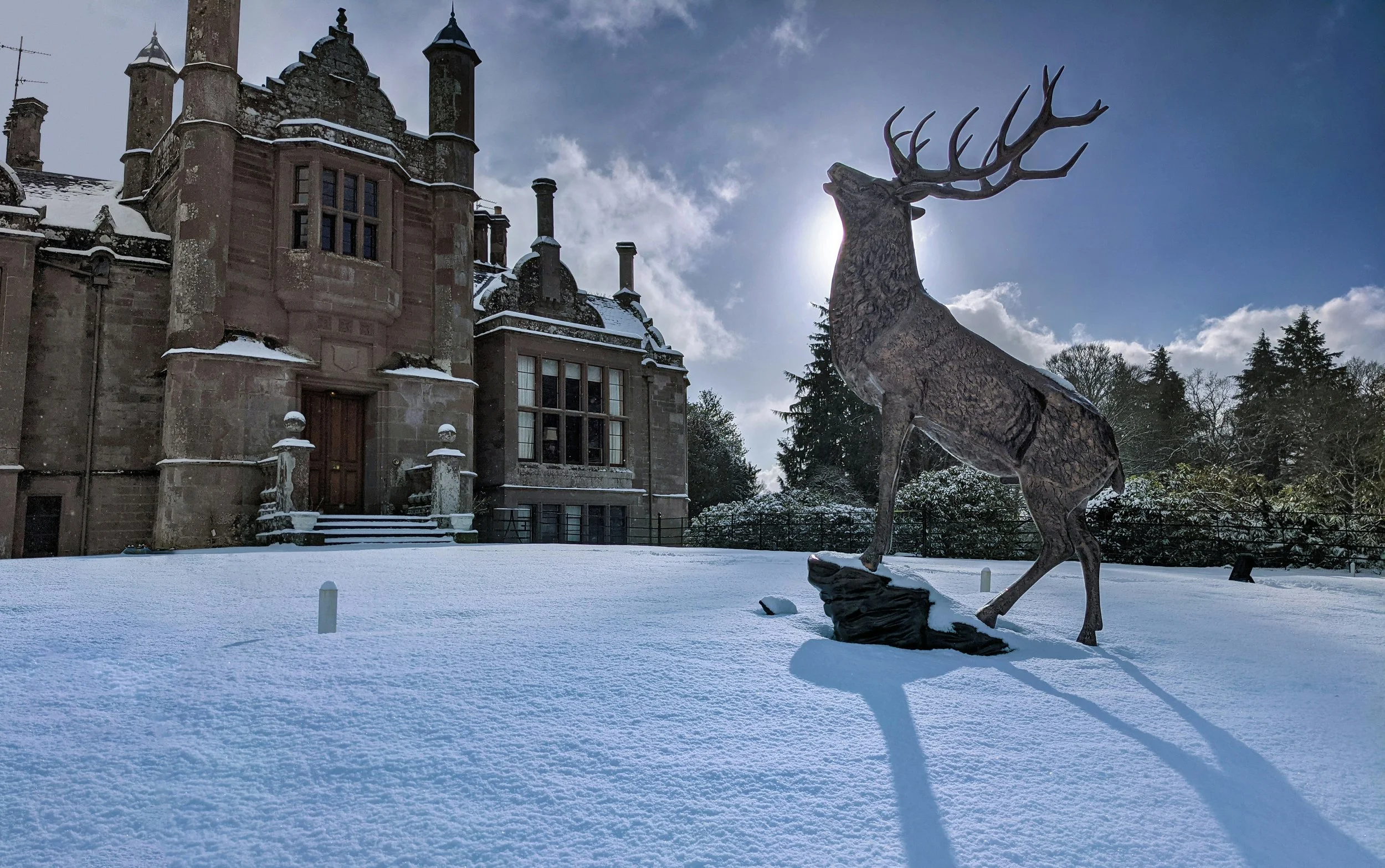
Winter in Scotland has always been more than a change of seasons. As daylight shortens and nights grow long, communities have historically turned inward toward hearth fires, shared meals, storytelling, and traditions meant to carry people through the darkest months of the year. From ancient solstice observances to lively New Year celebrations, Scotland’s winter customs reflect resilience, hospitality, and a deep sense of community.
While Christmas is often assumed to be Scotland’s primary winter holiday, history tells a different story. Many of Scotland’s most enduring winter traditions are older than Christmas or developed along a different cultural path. Together, they reveal how Scots have marked time, honored the turning year, and gathered in warmth even when the world outside was cold and dark.
1. Yule
Long before Christmas became a familiar holiday in Scotland, winter was marked by Yule, a season centered on the winter solstice. In the Northern Hemisphere, the winter solstice marks the shortest day and the longest night of the year. For pre-Christian communities in Scotland, this moment carried profound meaning. It represented both the depth of winter and the promise that the sun would soon return.
This reverence for the solstice is preserved in Scotland’s ancient landscape. Several prehistoric sites were deliberately designed to align with the setting of the midwinter sun, creating striking displays of light and shadow. At Maeshowe Chambered Cairn in Orkney, the solstice sunset illuminates the inner chamber with remarkable precision. Similar alignments can be seen at the Calanais Stones on the Isle of Lewis and Clava Cairns near Inverness. These monuments demonstrate a sophisticated understanding of astronomy and suggest that solstice gatherings were planned communal events.
Archaeologists believe these sites formed part of broader ceremonial landscapes rather than standing alone. Their continued significance across generations reflects how deeply seasonal cycles shaped belief systems, social organization, and survival strategies in early Scotland. Even as religious frameworks changed, the importance of the solstice endured, influencing later Yule traditions centered on light, protection, and renewal.
Fire played a vital role in Yule observances. Hearth fires were kept burning as symbols of protection and continuity, while communal fires marked the turning of the year. Light was believed to ward off harm and invite good fortune. Homes were decorated with greenery such as holly, ivy, and evergreen branches to represent life persisting through winter. These practices reflected a deep respect for nature’s cycles and the belief that human well-being was tied to balance within the natural world.
Hospitality was equally central to Yule. Visiting neighbors, sharing food, and ensuring no one faced winter alone were essential customs. In small, rural communities, isolation during winter could be dangerous. Yule traditions emphasized collective responsibility and mutual care, reinforcing the idea that survival depended on cooperation.
2. Christmas
Scotland’s observance of Christmas followed a markedly different path from much of Europe. Following the Protestant Reformation in the 16th century, Christmas celebrations were discouraged and eventually banned by the Church of Scotland. The holiday was viewed as overly religious and closely associated with Catholic tradition. For centuries, December 25 passed largely unremarked and was treated as a normal working day.
The absence of Christmas as a public holiday reshaped Scotland’s winter calendar. Festive gatherings were often delayed until the New Year, helping to elevate Hogmanay as the primary winter celebration. Despite the suppression of Christmas, winter traditions did not disappear. Many Yule customs continued quietly within homes. Families gathered, shared meals, lit candles, and maintained seasonal practices rooted in much older traditions.
It was not until the 19th and early 20th centuries that Christmas gradually returned to Scottish society. Industrialization, social reform, and changing attitudes toward leisure and family life all contributed to its revival. When Christmas re-emerged, it did so unevenly and with less emphasis than in other countries. Modern Scottish Christmas celebrations reflect this layered history, blending ancient seasonal customs with Christian and contemporary influences while remaining secondary to other winter traditions.
3. Hogmanay
While Christmas faded from prominence for generations, Hogmanay rose to become Scotland’s most important winter celebration. Hogmanay is the Scots word for New Year’s Eve and is celebrated on December 31, often continuing into New Year’s Day. Historically, it served as the primary occasion for communal gathering, celebration, and renewal.
The origins of Hogmanay are complex and shaped by multiple influences, including Norse winter festivals, pagan solstice rituals, and later Christian traditions. What unites these influences is a focus on clearing away the old year and welcoming the new with intention and goodwill.
Hogmanay has long emphasized collective responsibility. Preparing for the New Year involved not only celebration but readiness. Homes, relationships, and communities were expected to enter the coming year in good order. This communal mindset explains why Hogmanay traditions center on visiting, welcoming, and generosity.
Redding the House
One longstanding Hogmanay custom is redding the house, or thoroughly cleaning the home before the New Year begins. Symbolically, the practice clears away the old year and makes space for renewal. Practically, it ensured homes were safe and functional during winter, reflecting the realities of life in colder months.
First-Footing
Another enduring Hogmanay tradition is first-footing, the act of welcoming the first visitor to cross a home’s threshold after midnight. This person was believed to set the tone for the year ahead. Traditionally, the first-footer arrived bearing symbolic gifts such as coal for warmth, bread or shortbread for sustenance, salt for preservation, or whisky for good cheer.
The symbolism behind first-footing reflects deeper cultural values. It reinforces the belief that prosperity is shared and that a good year begins with generosity. Opening one’s door at midnight, even in winter, speaks to Scotland’s strong tradition of hospitality and trust.
Auld Lang Syne
Music plays a central role in Hogmanay celebrations. At midnight, people across Scotland and around the world join hands to sing “Auld Lang Syne,” written by Robert Burns. The song reflects on friendship, memory, and shared experience. Its global popularity underscores the universal appeal of Hogmanay’s message, honoring the bonds that carry people forward together.
The Loony Dook
In some coastal communities, Hogmanay celebrations extend into New Year’s Day with the Loony Dook, where participants plunge into icy waters. Though playful in tone, the tradition reflects themes of renewal and courage, beginning the year refreshed and energized.
4. Up Helly Aa
One of Scotland’s most dramatic winter traditions is Up Helly Aa, a series of fire festivals held across Shetland between January and March. Rooted in Norse heritage, each festival features torch-lit processions led by an elected Guiser Jarl, who adopts the persona of a legendary Viking.
The celebration culminates in the ceremonial burning of a replica Viking longship, symbolizing light overcoming darkness. Up Helly Aa is not a single event but a season of festivals, each shaped by local character and community involvement. The careful planning, craftsmanship, and participation involved underscore its role as a living tradition rather than a historical reenactment.
5. Burns Night
Observed annually on January 25, Burns Night is a natural continuation of Scotland’s winter celebration cycle. While Yule honors the return of light and Hogmanay welcomes the New Year, Burns Night turns inward, focusing on poetry, language, and shared identity during the heart of winter.
The tradition commemorates the birth of Robert Burns, Scotland’s national poet. Burns captured everyday life through poetry that was humorous, political, romantic, and deeply human. Writing in both Scots and English, he preserved language and culture during a period of significant social change.
Many mark the occasion by attending a Burns Supper, where guests share a hearty meal of haggis, neeps, and tatties, often accompanied by drams of whisky. Burns’s poems and songs are recited throughout the evening, alongside toasts and music. While the structure is traditional, Burns Suppers are intentionally flexible, encouraging participation and inclusivity.
Carrying These Traditions Forward
Together, Yule, Hogmanay, Up Helly Aa, and Burns Night tell a story of how Scots have responded to winter for centuries. These traditions meet darkness not with retreat, but with gathering. They emphasize light, renewal, storytelling, and shared experience, reminding us that winter has long been a season for connection as much as endurance.
Today, these customs continue to evolve while remaining deeply rooted in history. They are practiced in homes, halls, and communities across Scotland and throughout the global Scottish diaspora, reinforcing cultural identity and shared values across generations. Whether through solstice observances, New Year celebrations, fire festivals, or evenings of poetry and song, Scotland’s winter traditions remain living practices rather than relics of the past.
At USCO, we are proud to help carry these traditions forward here in Oklahoma. One of the most meaningful ways we do this is through our annual Burns Night celebration, held each January in honor of Scotland’s national bard. Burns Night brings people together through poetry, music, shared meals, and fellowship, echoing the same values of hospitality and community that have defined Scotland’s winter traditions for centuries.
By learning about and participating in these customs, we honor a living heritage. From ancient solstice monuments to Hogmanay gatherings and Burns Suppers, Scotland’s winter traditions invite us to slow down, reflect, and find warmth in one another’s company, even during the longest nights of the year.
Sources & Further Reading
Yule, Winter Solstice, and Christmas
Scotland.org – Scotland’s Festive Season & Winter Celebrations
National Trust for Scotland – Scottish Christmas Traditions
Historic Environment Scotland – Christmas and Winter Traditions Timeline
Scotland’s Wild – Ancient and Historic Christmas Traditions
Hogmanay
Scotland.org – Hogmanay Events and Traditions
Scotland.org – Hogmanay Facts and Customs
Historic UK – The History of Hogmanay
History UK – Pagan Roots of Hogmanay and First-Footing
Up Helly Aa and Winter Fire Festivals
VisitScotland – Scottish Winter Festivals
Scotland.org – Seasonal and Cultural Events
Burns Night
Scotland.org – Burns Night Overview
Scotland.org – Scotland’s Bard: Robert Burns
Scotland.org – Burns Night: The Ultimate Guide
Scotland.org – Burns Supper Guide